
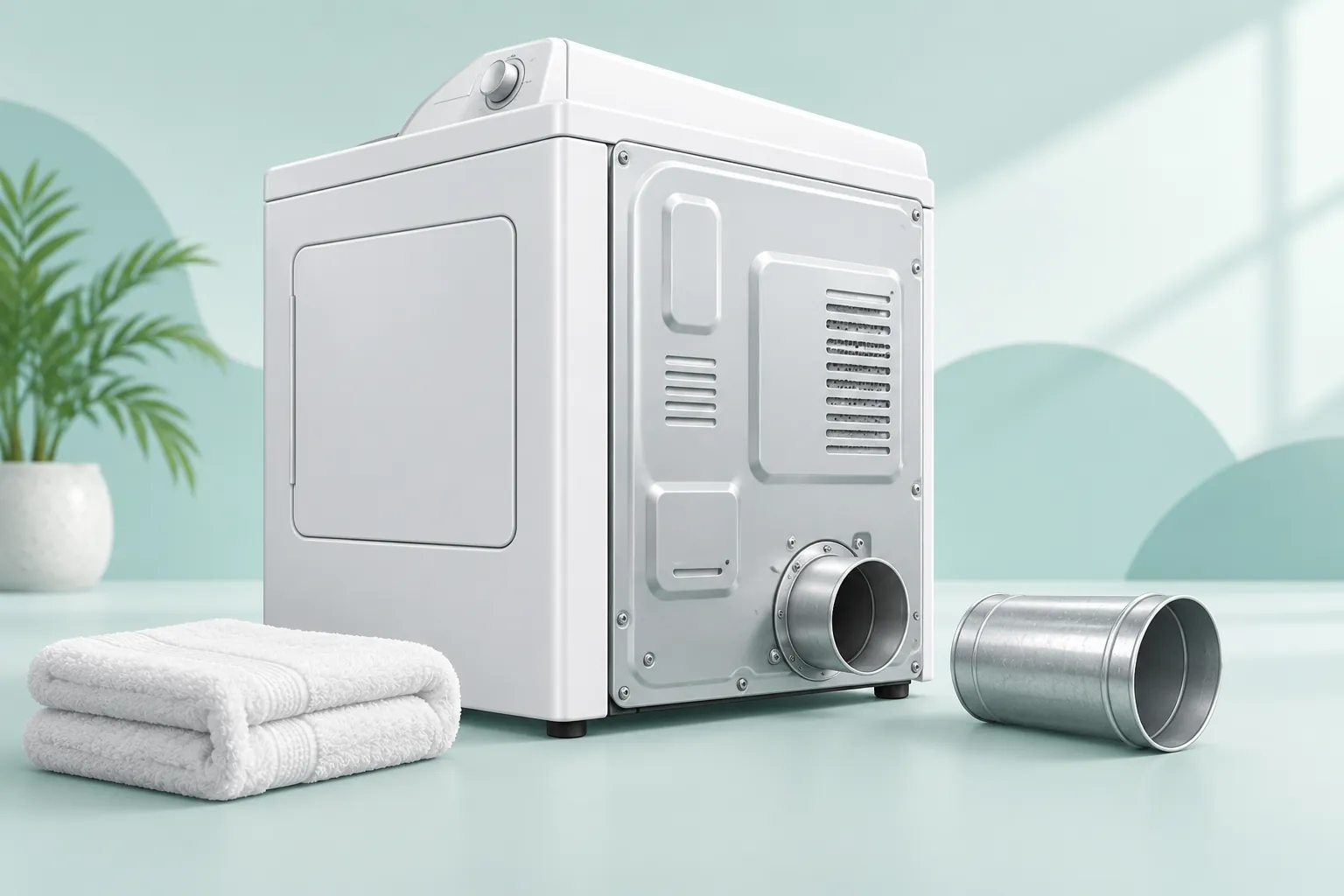
Towels are usually the first thing to show a dryer problem. Shirts and thin clothes dry fine, then the towels come out warm but damp in the middle. Before you buy a new dryer, work through this list. The cause is often airflow in the vent, but the load and the washer matter too.
Why towels are the test
Towels hold more water than most laundry. They are thick, and they are usually washed in large loads. Heat warms them, but airflow removes the moisture. If the vent is restricted, the dryer circulates damp heat, and heavy fabric shows it before light fabric does.
Humid Treasure Coast air does not cause the problem by itself. A working dryer with a clear vent should dry a normal towel load. Humidity just makes weak airflow easier to notice, and there is less margin in a small laundry closet.
Rule out the easy causes first
- The washer. Check that the spin cycle works and the towels do not come out dripping. A dryer that starts with extra water is behind from the start.
- The load. Keep towel loads moderate so the fabric can tumble and separate. Do not mix heavy towels with thin items that can trip the automatic dryness sensor early.
- The lint screen. Clean it before every load.
- The heat setting. A low setting takes longer on a heavy load.
If one oversized load stays damp, adjust and try again. If normal towel loads repeatedly need a second cycle, keep going.
Signs the vent is the problem
- Towels need a second cycle while lighter clothes dry normally.
- The dryer door or cabinet is hot at the end of a cycle.
- The laundry room gets unusually hot or humid every time the dryer runs. A mildly warm closet on a big load is normal. A room that becomes uncomfortable every cycle is not.
- The outside vent flap barely moves while the dryer runs, if you can see it safely from the ground.
- Lint behind the dryer or around the hose.
- A gradual change. If the same load used to dry in one cycle and now takes two, something changed.
The reason is trapped heat. When lint, a crushed hose or a long restricted run blocks the exhaust, the dryer keeps heating but the humid air cannot leave. Each pass removes less moisture, so the dryer runs longer and the room fills with warm air. A blocked vent is also a fire risk. See dryer vent fire warning signs.
Check behind the dryer
If it is safe to do so, look behind the dryer. A crushed or sharply bent hose limits airflow even when the vent beyond it is clear. This happens when the dryer is pushed back too far, moved for flooring or painting, or installed in a tight closet. Do not force a dryer out of a tight space. Do not climb to a roof vent or remove exterior covers, and do not take apart a gas dryer unless you are qualified.
Clean the vent before replacing the dryer
Dryer vent cleaning removes lint from the exhaust path so the dryer can move humid air outside again. For a heavy towel load, that can make a clear difference. It does not fix a dryer with a mechanical fault, but it removes a common restriction from the list. If the vent is clean and the towels are still damp, the next step is a look at the appliance or the laundry habits, and you have spent less than a new machine.
If the dryer came with the house and you do not know its history, this is especially worth doing. See buying a home and its ducts and vents. For a vent with a long run, roof exit or stacked closet, see roof-exit and two-story dryer vents.
Dryer vent cleaning is $125 for a single-story home and $175 for a two-story home.
Call (772) 237-0018 if towels keep coming out damp. See dryer vent cleaning in Port St. Lucie. We are open Monday to Saturday, 8 AM to 5 PM, and same-day service is available.