
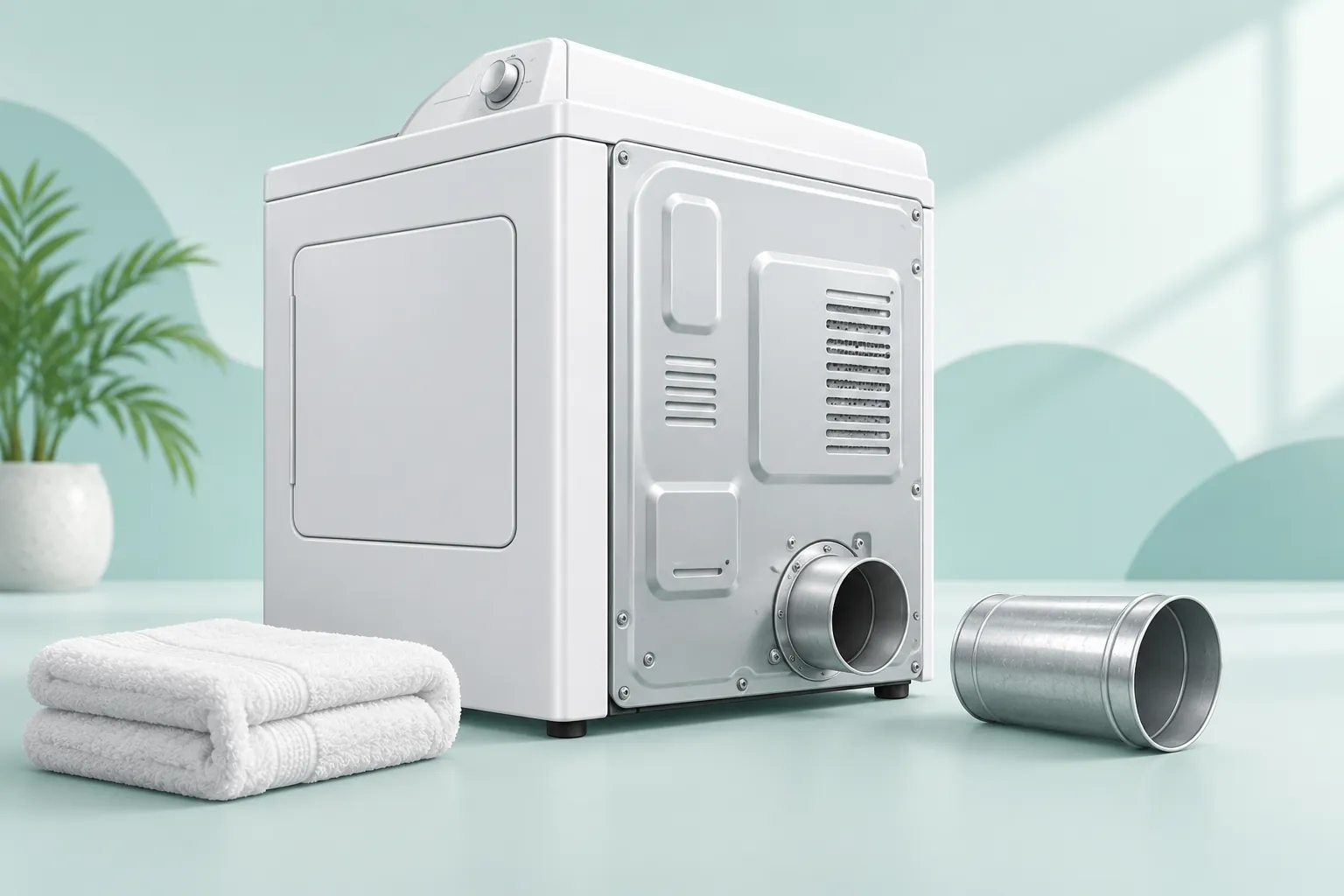
A dryer that is working harder than it used to usually has an airflow problem in the vent, not in the machine. Hot air that cannot leave the house builds up around the dryer and in the vent. This page lists the warning signs, explains why the lint trap is not enough, and says when to stop using the dryer.
Why a clogged vent matters
A dryer pushes hot, humid air through a vent to an outside wall or the roof. The lint screen catches most lint, but some fine lint gets past it and settles inside the vent, especially at bends and at the exit. As the passage narrows, less air gets out and more heat stays in the vent and the dryer. The US Fire Administration lists failure to clean as the leading factor in home clothes dryer fires. Its clothes dryer fire safety flyer covers the figures and the basics.
Warning signs
- A burning or hot, dusty smell during or after a cycle. Stop the load and do not run the dryer again until the vent has been checked.
- Clothes need two cycles when one used to do the job. A worn-out dryer is possible, but a restricted vent is more likely.
- A hot dryer cabinet or a hot, humid laundry room after a cycle, because heat is not leaving the house.
- Lint around the outside vent hood. Go outside and look at the exit. Lint on the flap or hanging from the opening points to a larger clog inside.
- A flap that barely moves while the dryer runs. It should swing open with the airflow.
- Damp or stale-smelling laundry at the end of a cycle. For this symptom in humid weather, see why towels stay damp after a full cycle.
One sign is worth a look. Two or more together mean the vent should be cleaned, not noted for later.
Lint trap versus dryer vent
These are two jobs. Cleaning the lint screen after every load is the right habit and takes seconds. It does not reach the duct behind the dryer. That duct can run through a wall, a floor or an attic and out to a hood on the roof or the outside wall, often with several bends. You cannot see into it, and a vacuum hose from either end does not clear the whole run.
Lint screen cleaning keeps each load flowing. Vent cleaning removes what has built up in the duct itself. Neither replaces the other. The part you can reach, the flexible connector behind the dryer, is also rarely where the worst of it sits.
What cleaning should cover and what it costs
A proper dryer vent cleaning covers the run from the dryer connection to the exterior exit, not only what is reachable from one end. Our dryer vent cleaning is $125 for a single-story home and $175 for a two-story home, because the run is usually longer. Homes with a long run, several turns or a roof exit are covered in roof-exit and two-story dryer vents.
If you have never had the vent cleaned or do not know when it last was, that is reason enough to schedule it before a sign appears. If you have a burning smell, stop using the dryer first.
Call (772) 237-0018 to book dryer vent cleaning at our shop at 2489 SW Galiano Rd Ste 200, Port St. Lucie, or see dryer vent cleaning in Port St. Lucie. We are family-owned, licensed and insured, and same-day service is available.