
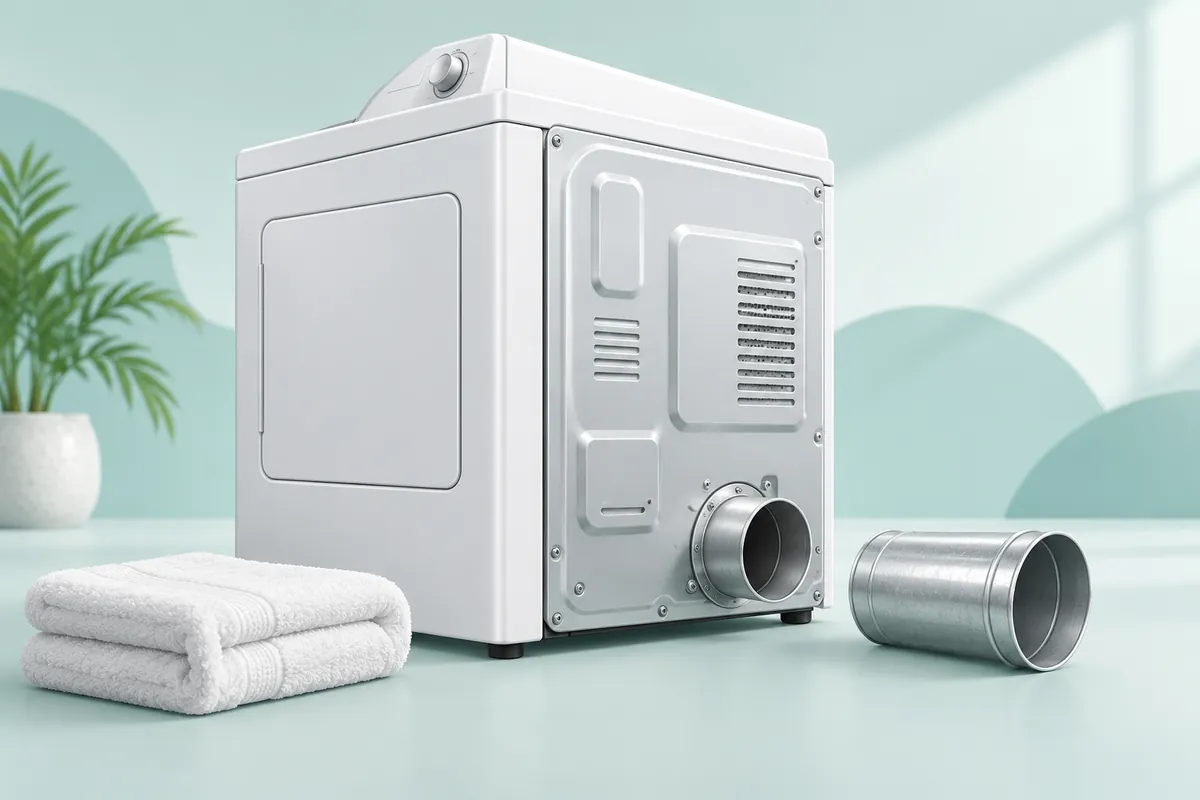
Some Florida homes send dryer exhaust through the roof instead of a side wall. That layout can work, but it changes the cleaning conversation. A roof-exit dryer vent may have a longer vertical run, a termination cap that is harder to see, and access concerns that should not be handled with guesswork.
For Port St. Lucie homeowners, roof dryer vent cleaning Florida service is mainly about airflow and access. The vent still has one job: carry warm moist air outdoors. The difference is that the exit point may be above the laundry room, above a garage, or on a roof plane that is not safely reachable by the homeowner.
Why roof-exit vents need attention
Dryer lint is light, but it does not politely disappear. In a vertical or angled run, lint can collect along turns, seams, and the termination cap. Florida humidity can make lint feel heavier and more stubborn, especially when airflow is already reduced. Over time, the dryer may have to push air through a path that is narrower than it used to be.
The homeowner usually notices performance before seeing the vent cap. Loads take longer. Towels stay damp. The laundry room feels hot or humid. The dryer may heat normally but still need extra time. With a roof-exit vent, the exterior clue is often out of sight, so the symptoms inside the house matter more.
Roof caps are not all the same
One roof termination may have a low-profile cap. Another may have a taller hood. Some are easier to clean than others. Some older or poorly chosen caps can trap lint around the opening. A cap that looks fine from the driveway may still have buildup at the outlet.
This is why roof-exit dryer vent cleaning should not be treated like a quick glance at the wall flap. The cleaning plan needs to consider the route from the dryer to the roof, the condition of the transition hose behind the dryer, and the termination point. If the cap is damaged, painted shut, clogged, or poorly suited to dryer exhaust, cleaning alone may not address every issue.
Do not make the roof the homeowner project
Florida roofs are not friendly work platforms. Tile, shingles, heat, rain, pitch, and ladder placement all matter. A homeowner trying to inspect a dryer vent cap from the roof can create a real safety problem or damage roofing materials. That is not a good trade for a laundry issue.
If the vent exits through the roof, tell the dryer vent cleaner before scheduling. Ask whether roof access is needed and whether the termination can be evaluated safely. In some homes, cleaning can be performed from the dryer side and the termination checked where practical. In others, the roof cap itself may need direct attention.
Common signs of a restricted roof-exit vent
The signs are similar to other dryer vent restrictions, but they are easier to ignore because the outlet is not visible. Watch for heavy loads taking longer than they used to. Notice whether the laundry room gets unusually warm. Pay attention if the dryer shuts off before thick items are dry, or if towels need repeated cycles.
Another clue is a dryer that worked well after installation but slowly declined over time. Appliances can fail, but a gradual loss of drying performance often points to airflow. A roof-exit route can hide that loss until it becomes annoying enough to interrupt the household schedule.
What Air Duct Cleaning PSL tells local homeowners
Air Duct Cleaning PSL serves Port St. Lucie and the Treasure Coast. The company is family-owned, licensed and insured, and publicly represented by Jeff. Dryer vent cleaning pricing is $125 for single-story service and $175 for two-story service. If your dryer vents through the roof, mention that layout when calling so access can be discussed before the visit.
Hours are Monday through Saturday, 8AM-5PM, and Sunday is closed. Same-day availability may be possible when the route allows. Air Duct Cleaning PSL has a 5.0 rating with 47 Google reviews. Call (772) 237-0018 for scheduling questions.
How to reduce repeat restrictions
Start with the basics inside the home. Clean the lint screen before each load. Do not overload the dryer with towels, bedding, or thick fabrics. Keep enough clearance behind the dryer so the transition hose is not flattened. If the dryer is moved for flooring, painting, or appliance replacement, recheck the hose before pushing the machine back.
For roof-exit vents, it is also smart to keep an eye on performance rather than waiting for a visible exterior clue. You may not see the roof cap often, but you will notice when drying times change. Treat that change as information.
A roof exit is manageable when handled deliberately
A roof-exit dryer vent is not automatically a problem. It just needs a cleaning approach that respects the longer run and the roof termination. The wrong approach is to ignore it because it is out of sight. The other wrong approach is to climb around with a flashlight and optimism. Neither is a maintenance plan.
If your Port St. Lucie home has a roof-exit dryer vent and drying has slowed down, call Jeff at Air Duct Cleaning PSL at (772) 237-0018. He can talk through the layout, pricing, and access considerations before the work is scheduled.