
If you’ve ever caught a musty, damp smell the second your AC clicks on, your mind probably went straight to one place: mold in air ducts. In Port St. Lucie, that instinct is usually right more often than you’d think. Florida humidity is basically a mold incubator, and your duct system is full of the two things mold needs most — moisture and dark, still air. The good news is that once you know what you’re actually looking at, deciding what to do about it gets a lot simpler.
Why Florida Ducts Are Especially Prone to Mold
Every AC system produces condensation. That’s normal — it’s how the unit pulls humidity out of the air. The problem starts when that moisture has somewhere to sit instead of draining away. A dirty condensate line, a duct with a slow leak, or ductwork that runs through a hot, humid attic can all create the damp conditions mold spores need to take hold.
Add in our outdoor humidity — which sits well above 70% for most of the year on the Treasure Coast — and you’ve got a near-constant supply of moisture getting pulled into the system every time the AC runs. Homes near the coast in Jensen Beach, Stuart, and Vero Beach deal with this even more, since salt air and humidity together are rough on any HVAC component that isn’t sealed up tight.
What Mold in Air Ducts Actually Looks Like
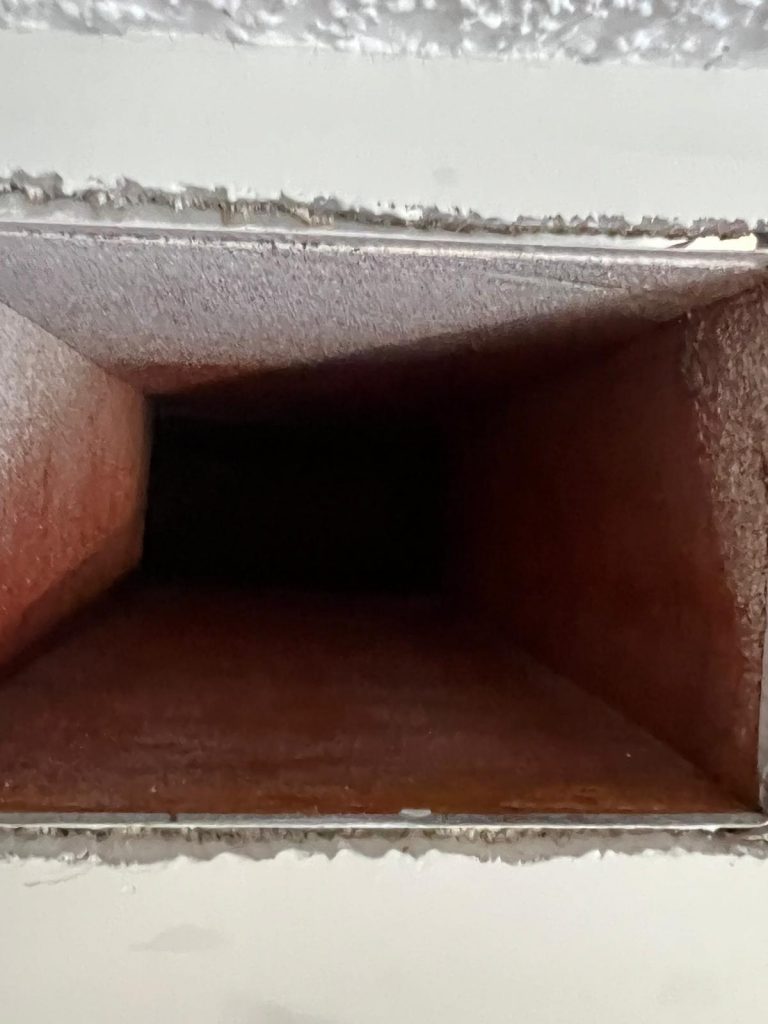
People often expect mold to look like something out of a horror movie. Sometimes it does. Often it doesn’t. Here’s what we actually find when we open up a duct system:
- Dark spots or staining around vent covers, especially where dust has built up and stayed damp
- Fuzzy or slimy patches inside the ductwork itself, usually near seams, joints, or low points where water can pool
- Discoloration on the drywall around a vent — a ring of gray, green, or black that wasn’t there before
- Visible growth on the evaporator coil or drip pan, which sits right next to your ducts and shares the same airflow
Smell is usually the first clue, though. A musty, earthy odor that’s strongest right when the system starts up — and fades once air has been moving for a while — is a classic sign. If that smell has been hanging around for more than a week or two, it’s worth having someone actually look inside the ducts rather than just spraying air freshener and hoping.
The Health Angle, Without the Scare Tactics
We’re not doctors, and we’re not going to throw around scary statistics we can’t back up. What we can tell you, because it’s common knowledge, is that mold and mold spores are a recognized irritant for a lot of people — particularly anyone with allergies, asthma, or other respiratory sensitivities. If someone in your house has started sneezing more, dealing with a scratchy throat, or noticing their allergies act up specifically when the AC is running, dirty or mold-affected ducts are a reasonable thing to rule out.
It’s also worth remembering that ducts don’t just carry cooled air — they carry whatever is inside them, all day, every day, into every room of your house. That’s the whole reason duct condition matters beyond just comfort.
Why Bleach and DIY Sprays Are the Wrong Move
We get this question a lot: “Can I just spray bleach or a mold-killing product into the vents myself?” We’d rather you didn’t, and here’s why.
Bleach doesn’t reach mold growing inside porous surfaces or deep in duct insulation — it mostly just bleaches the color out of what’s on the surface, so it looks gone while the actual growth is still there. Worse, spraying liquid into a duct system means you’re introducing more moisture into an environment that’s already prone to growing mold in the first place. And if that spray reaches your HVAC’s electrical components or the blower motor, you’re looking at a repair bill that has nothing to do with air quality.
There’s also the fact that ductwork is a closed system running through your attic, walls, and crawlspaces. You can spray what you can reach through a vent cover. You can’t reach — or see — most of what’s actually back there.
What Actually Gets Rid of It
Professional duct cleaning uses specialized equipment to physically agitate and extract debris, dust, and mold growth from the entire system — not just the parts you can reach with a can of spray. For a mold situation specifically, that means:
- Inspecting the full duct run, not just the vent covers, to find where moisture is actually getting in
- Physically removing buildup rather than masking it with chemicals
- Checking the source — a condensate drain, a duct leak, poor attic ventilation — so the mold doesn’t just come right back
- Sanitizing treatments and air purification add-ons for homes that need extra protection, particularly after a confirmed mold issue
That last part matters. Cleaning the mold out without addressing why it grew there in the first place is just buying yourself a few months before it’s back.
When to Call Someone
If you’re noticing a persistent musty smell, visible staining around your vents, or allergy symptoms that seem to track with your AC running, it’s time to have your ducts actually inspected rather than guessed at. We’ve been cleaning air ducts and dryer vents throughout Port St. Lucie, Fort Pierce, Vero Beach, Jensen Beach, Stuart, Tradition, and St. Lucie West for years, and Florida-humidity mold is one of the most common things we run into.
Air Duct Cleaning PSL is family-owned and operated, licensed and insured, and we offer same-day service when your schedule needs it. Air duct cleaning starts at $245. Give us a call at (772) 237-0018 and we’ll help you figure out whether what you’re smelling is something to worry about — and if it is, we’ll take care of it right.