
We hear a version of the same sentence almost every week: “But I clean my lint trap after every load — why would I need my dryer vent cleaned too?” It’s a fair question, and honestly, it’s the most common misconception we run into in Port St. Lucie homes. The truth is that dryer vent cleaning vs lint trap cleaning are two completely different jobs, and doing one does not replace the other. If you’ve only ever done the second one, there’s a good chance lint has been building up somewhere you can’t see for years.
What the Lint Trap Actually Catches
Your lint trap — that little pull-out screen inside the dryer door — is designed to catch the bulk of the lint before it ever leaves the drum area. It does its job well, and cleaning it every load is genuinely the right habit. But no lint trap catches everything. A portion of fine lint, especially from towels, blankets, and pet-hair-covered clothes, slips right past the screen and rides the exhaust airflow down into the vent duct.
Over months and years, that “small portion” adds up. It clings to the inside walls of the metal ductwork, narrows the airway, and slows the exhaust down — which only makes more lint stick on the next load. It’s a snowball effect that a clean lint trap can’t stop, because the lint trap was never designed to filter the whole line.
What the Dryer Vent Actually Is
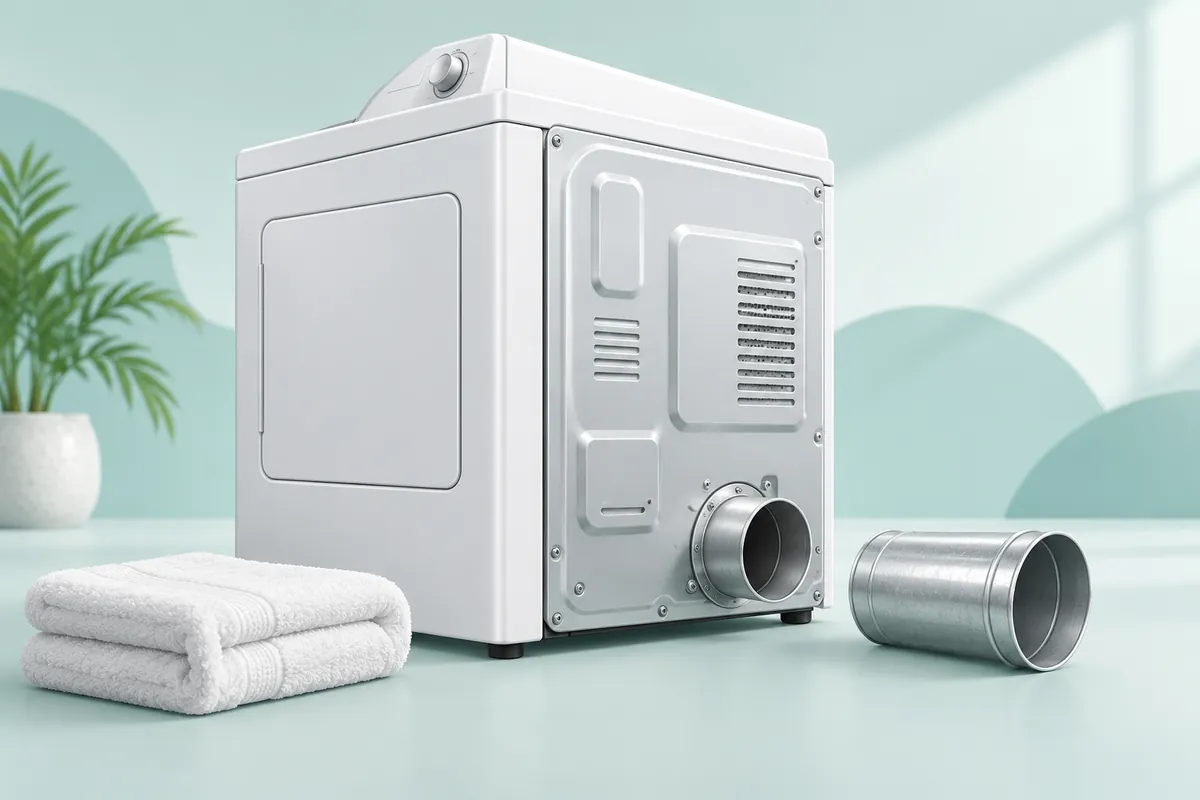
The dryer vent is the duct that runs from the back of your dryer, usually through a wall, floor, or attic space, and out to a vent hood on the exterior of your house. Depending on how your laundry room is set up, that run can be anywhere from a few feet to twenty or more feet long, sometimes with several bends.
Here’s the part homeowners don’t realize: you cannot see inside that duct, you cannot reach it with a vacuum hose from either end effectively, and you have no way of knowing how much lint has accumulated in the middle of the run. It’s completely out of sight until something goes wrong — clothes taking two or three cycles to dry, the dryer running hot, a burning smell, or the exterior vent hood flap barely moving when the dryer is on. Every bend in that duct is also a place where lint likes to collect faster, since airflow slows down at each turn — which is part of why longer or more complex runs tend to need attention sooner than a short, straight shot to an exterior wall.
Why Both Matter — For Different Reasons
Think of it less as “which one should I do” and more as two jobs that protect two different things:
- Lint trap cleaning — protects your dryer’s short-term performance. Keeps airflow moving efficiently load to load and is something every homeowner should do themselves, every single time.
- Dryer vent cleaning — protects the long-term airflow of the entire exhaust system. This is the deep clean that removes what’s built up inside the duct itself, something a household lint trap habit can never reach.
A clogged dryer vent is a well-known cause of home dryer fires, which is exactly why lint accumulation inside the duct isn’t something to shrug off. Beyond the safety angle, a restricted vent also makes your dryer work harder than it should — longer dry times, higher energy bills, and more wear on the drum, belt, and heating element over time. A dryer that’s fighting a blocked vent on every cycle simply ages faster than one that can exhaust freely.
Signs Your Vent Line Needs Attention
Since you can’t see inside the ductwork, you have to go by symptoms. If any of these sound familiar, it’s worth having the line checked:
- Clothes need two or more cycles to fully dry
- The dryer or laundry room feels noticeably hot during a cycle
- You notice a burning or musty smell when the dryer runs
- The outside vent hood flap doesn’t open much, or you don’t feel strong airflow near it when the dryer is running
- Lint shows up around the dryer door seal or on the floor behind the machine
- It’s been a year or more (or you honestly can’t remember) since the vent duct itself was cleaned
Any one of these on its own isn’t necessarily an emergency, but a couple together is a pretty clear sign the duct is restricted somewhere along the line.
How We Handle It in Port St. Lucie
When we clean a dryer vent, we’re clearing the full run — from the back of the dryer to the exterior termination point — not just what’s reachable from either end. For a single-story home, that service runs $125; for a two-story home, where the duct run is typically longer or more complex, it’s $175. We recommend having it done annually for most households, and more often if you’re drying a lot of towels, bedding, or pet hair, or if your dryer sees heavy daily use.
We’re a family-owned, licensed and insured company based right here in Port St. Lucie, and we serve homeowners throughout Fort Pierce, Vero Beach, Jensen Beach, Stuart, Tradition, St. Lucie West, and the rest of the Treasure Coast. Same-day service is often available, and we currently sit at 5.0 stars across 47 Google reviews from neighbors who’ve had us out. If you’re due for air duct cleaning at the same time, we’re happy to look at both systems on one visit and give you a straight answer on what actually needs doing.
Keep Doing Both — Just Don’t Confuse Them
Keep wiping out that lint trap every single load. That habit is good and it matters. Just don’t let it give you a false sense of security about the rest of the system. The dryer vent cleaning vs lint trap cleaning distinction really comes down to this: one is a daily habit you handle in five seconds, the other is a whole-duct service that needs a professional to do right.
If it’s been a while since anyone’s looked at your vent line, or your dryer just hasn’t seemed like itself lately, give us a call at (772) 237-0018. We’re happy to take a look, explain what we find, and get your system breathing properly again.