
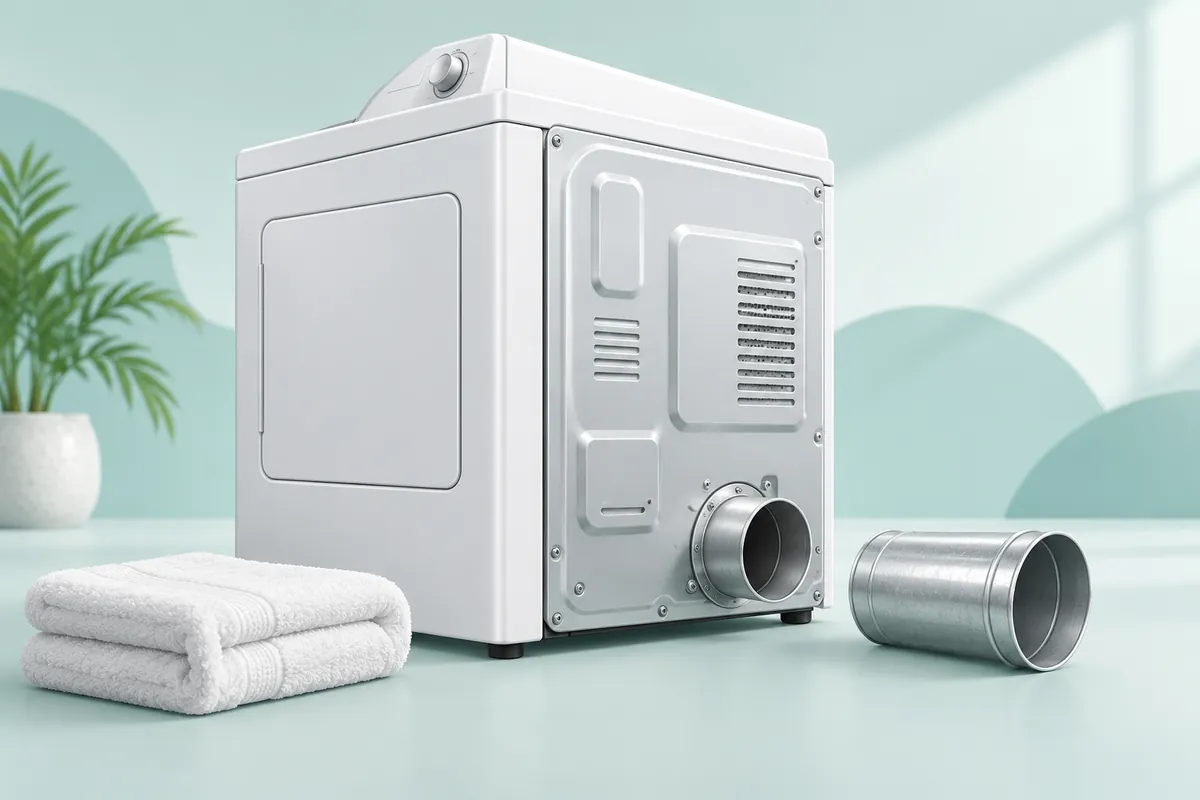
A slow dryer can make a new appliance look tempting. The cycle ends, the clothes are still damp, and the mental shopping cart opens by itself. Before replacing the machine, it is worth asking one practical question: can the dryer actually breathe?
Dryer vent cleaning before replacing dryer equipment is not a magic appliance repair. If the motor, heating element, sensor, or control board has failed, the dryer may still need service or replacement. But when the dryer heats and the load still takes too long, restricted airflow is one of the first things Port St. Lucie homeowners should rule out.
Why airflow can make a good dryer act old
A dryer does not dry clothes with heat alone. It dries by moving warm air through wet fabric and carrying moisture out of the home. If the vent is packed with lint, kinked behind the dryer, blocked at the exterior cap, or routed through a long restricted path, the dryer may still produce heat while removing moisture slowly.
That is why a dryer can feel hot but perform poorly. The machine may run a full cycle and leave heavy items damp. It may need a second cycle for towels, jeans, or bedding. Automatic cycles may end early because sensors read surface dryness while thicker fabric still holds moisture. The appliance looks guilty, but the vent may be the quiet accomplice.
Clues that point toward the vent
Look for patterns. If the dryer heats normally but loads take longer than they used to, airflow should be checked. If the laundry room gets hot or humid during operation, the vent may not be moving moist air outside efficiently. If the exterior vent flap barely moves while the dryer runs, that is another clue. If lint collects behind the machine or the transition hose looks crushed, the issue may be close to the dryer itself.
These signs do not prove the vent is the only problem. They do make vent cleaning a practical step before spending money on a replacement. Buying a new dryer and connecting it to the same restricted vent can produce the same slow drying result, only with a fresher receipt.
When replacement may still make sense
There are cases where the appliance needs professional repair or replacement. If the dryer does not heat at all, shuts off unexpectedly, trips a breaker, makes grinding noises, or displays an error code, an appliance technician may be the better first call. If the dryer is very old and has multiple failing parts, replacement may be reasonable.
The point is sequence. When the main complaint is slow drying and the dryer still heats, checking the vent first is usually a measured move. It can prevent unnecessary appliance shopping, and it gives any repair technician a cleaner baseline if the dryer still performs poorly afterward.
What a homeowner can check safely
Clean the lint screen and run a normal load. Avoid overloading the drum, especially with towels or bedding. Look behind the dryer to see whether the flexible hose is crushed or sharply bent. If the dryer was recently moved, installed, or pushed back after cleaning, the hose may have folded behind it.
If the exterior vent is safely visible from the ground, check whether airflow is noticeable while the dryer runs. Do not climb onto a roof or remove building covers to investigate. Roof-exit vents, condo terminations, and second-level exits need a safer approach. The ladder phase is where small savings often become a larger invoice.
How Air Duct Cleaning PSL fits into the decision
Air Duct Cleaning PSL provides dryer vent cleaning in Port St. Lucie and across the Treasure Coast. The company is family-owned, licensed and insured, and publicly represented by Jeff. Dryer vent pricing is clear: $125 for single-story service and $175 for two-story service.
The company is available Monday through Saturday, 8AM-5PM, with Sunday closed. Same-day availability may be possible depending on the schedule. Air Duct Cleaning PSL has a 5.0 rating with 47 Google reviews, and the phone number is (772) 237-0018.
What to expect after the vent is cleaned
After a restricted vent is cleared, many homeowners notice that normal loads dry more predictably. The laundry room may feel less hot during cycles. Towels may need less time. The dryer may not have to run repeated cycles for the same load. Those are good signs that airflow was part of the problem.
If performance does not improve after cleaning and the visible hose is not crushed, the appliance itself may need diagnosis. That is still useful information. You can talk to an appliance technician knowing the vent path has been addressed, which makes the next decision less speculative.
A practical order of operations
Before replacing a slow dryer, check the simple items: lint screen, load size, hose position, and vent airflow. If the pattern still points to poor exhaust, schedule dryer vent cleaning. Then evaluate the dryer again with normal loads. This sequence is not dramatic, but it is sensible.
If your dryer in Port St. Lucie heats but still leaves clothes damp, call Jeff at Air Duct Cleaning PSL at (772) 237-0018. A clear vent may solve the problem, or it may tell you the appliance really is next. Either way, you will be making the decision with better information.